Google keeps its ad empire, but loses the keys to some of the rooms
The biggest story of the week: a federal judge declined to break up Google’s ad tech business. Judge Leonie Brinkema, who ruled last year that Google illegally monopolized key ad tech markets, rejected the Department of Justice’s push to force divestiture of AdX and to open-source DFP’s auction logic. Instead, per reporting from the Washington Post and TechCrunch, she ordered behavioral remedies: changes to how Google operates its tools, including opening parts of its ad tech stack to rivals.
Why it matters: everyone waiting for a “Ma Bell moment” in ad tech didn’t get one. Google keeps AdX, keeps DFP, keeps the plumbing that runs a huge share of programmatic buying. What changes is access: rivals reportedly get more room to compete inside Google’s pipes rather than around them. For agencies and brands, the practical read is: don’t expect prices or auction dynamics to move fast. Regulatory wins that stop short of structural remedies tend to produce years of compliance theater before they produce actual competition. File this under “significant, not transformative,” and keep watching, because remedy details are still being worked out.
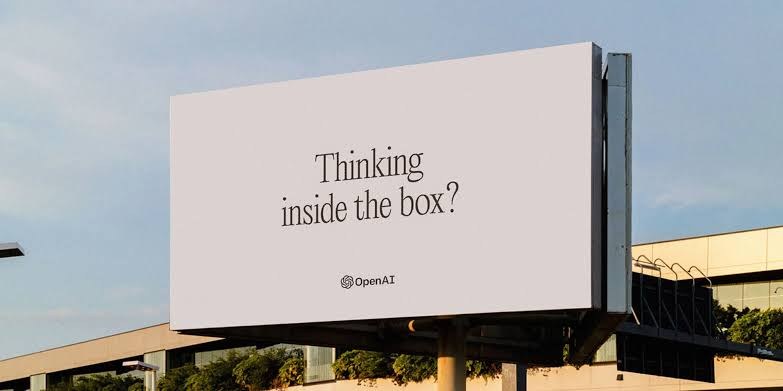
OpenAI’s ad business just went global, and it’s already a unicorn-sized line item
While the DOJ was losing its big swing at Google, OpenAI was busy building a rival ad platform at a pace that should worry every media buyer’s forecasting model. OpenAI announced that ChatGPT Ads hit a $1 billion annualized revenue run rate in under 200 days from launch, and on the same day, opened its self-serve Ads Manager to advertisers across Europe, India, the Middle East, and North Africa, bringing the total to roughly 52 countries with self-service access.
Why it matters: this is no longer a curiosity pilot. A $1 billion run rate that fast, paired with international self-serve access, tells you OpenAI is done experimenting and is now building distribution infrastructure at platform scale. Reported entry bids in the $3 to $5 CPC range with CPMs around $25 to $60 put it squarely in “worth testing now, before CPMs catch up to demand” territory. Agencies who wait for a mature playbook before touching a new channel have historically paid more to enter later. The smarter move is to start running small tests now while the channel is still figuring out its own pricing.
X kills the program that funded a generation of creators
Also this week: X officially ended its Creator Revenue Sharing program on September 7, with final payouts landing across mid-to-late August and September 11. In its place: the “Original Content Rewards Program,” opening for applications September 8, which pays based on “qualified impressions” from verified users and explicitly excludes aggregators, reposts, and copies.
Why it matters: this is a meaningful tightening, not a rebrand. The old program rewarded engagement volume; the new one is trying to reward originality and penalize the repost economy that flooded the platform with recycled content for cash. For brands running creator or affiliate programs on X, this is a real strategic shift: the incentives that shaped a whole class of X-native creator behavior for the past few years just changed underneath them. If any part of your influencer strategy depends on X creators’ revenue math, it’s worth a re-audit this month, not next quarter.
Google Assistant goes quiet, Gemini takes the wheel
A smaller but symbolically loaded change: Google confirmed Google Assistant began disappearing from Android devices on September 4, 2026, as the company finishes its transition to Gemini as the default AI assistant across the ecosystem.
Why it matters: it’s a reminder that Google is willing to sunset a decade-old, widely used consumer product to consolidate everything behind one AI brand. For marketers building voice, smart-display, or Assistant-integrated experiences, that runway is now officially closing. More broadly, it’s another data point in a pattern worth naming out loud this week.
The pattern underneath all of it: manual control is disappearing
Zoom out and a theme connects three of this week’s stories that have nothing else in common. Google began auto-migrating legacy Broad Match and Automatically Created Assets campaigns to its AI Max system on September 1. Microsoft, in the same window, rolled AI Max into general release and turned it on by default for new Search campaigns. Add that to Gemini replacing Assistant and OpenAI scaling a fully automated ad marketplace, and the throughline is unmistakable: the platforms are removing the manual layer, not just improving the automated one.
Why it matters: this isn’t really about any single feature. It’s about optionality. A year from now, “opt out of automation and run it yourself” may simply not be a choice on the major platforms. Whether that’s good or bad depends entirely on how good your first-party data and measurement discipline are: automation rewards advertisers who feed it clean signal and punishes the ones who don’t. That’s the actual competitive advantage up for grabs right now, and it has nothing to do with creative or budget size.
None of this is about a clever campaign. It’s about who gets to make the decisions in the first place.
The takeaway
None of these stories are about a clever campaign or a viral moment. They’re about who gets to make the decisions in the first place. A judge just decided Google keeps most of its levers. OpenAI just proved an AI-native ad platform can scale globally in months, not years. X just changed what “getting paid to post” means. And two of the biggest ad platforms on earth quietly made automation the default, not the option.
The takeaway: if your Q4 plan doesn’t already account for less manual control and more machine-made decisions, this is the week to update it, not January.
We build the part of the plan the algorithms can’t buy for you: the moment itself. If that’s on your Q4 list, tell us about it.
Sources: Washington Post, TechCrunch, CCIA, explainx.ai, Bushletter, Digital Applied, TechBriefly, X/Twitter creator announcements, TheNextWeb, American Bazaar, Solutions Review, Agile Brand Guide.