What actually happened
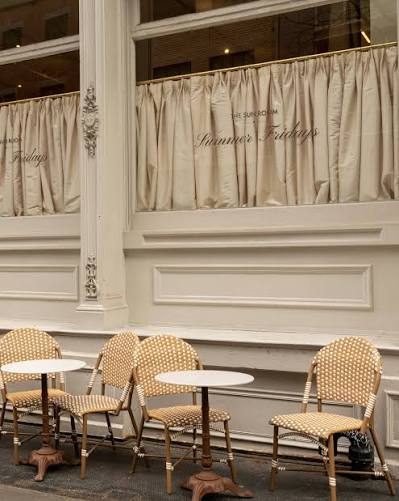
On 14–15 March 2026, Summer Fridays opened The Sun Room at 22 Wooster Street in SoHo (its first fragrance experience) for two days, 10am to 4pm. The room existed to introduce Sunlit Vanilla Eau de Parfum before it launched: scent sampling, vanilla lattes, surprise gifts, and a complimentary travel size for the first 150 guests each day. No purchase necessary.
The week after, 20–22 March, it did something cheaper and smarter: instead of building anything, it partnered with existing cafes and bakeries for a run of Sunlit Vanilla Bakery Pop-Ups. Buy a coffee, get a deluxe sample; the first 50 purchases each day also got a mini Lip Butter Balm.
The format travels. In London the brand took over Covent Garden Piazza with Space NK for two days to launch its Jet Lag Collection and Lip Butter Balm: sensory play, saturated colour and an ASMR-driven aesthetic, complimentary hot cocoa, free deluxe Jet Lag Mask samples, and exclusive merch plus a Jet Lag floral bouquet for the first 50 through the door each day. In Miami, a Honey Veil x Summer Fridays trailer parked in Coral Gables in January for two days of matcha and skincare samples.
Every single one of those is two days long. Not one is a custom build.
Why the small format wins
- Small enough to be full. This is the whole trick. 150 samples in a SoHo room reads as a phenomenon; the same 150 in a 10,000 square foot build reads as a failure. Scarcity isn’t only about the giveaway. It’s about the ratio of people to square footage. Density is the aesthetic.
- Borrow the room. A cafe, a Space NK, a partner’s trailer. The host brings the lease, the licence, the staff, the foot traffic and an audience that already trusts them. You bring the reason. That is an enormous amount of infrastructure you don’t have to buy.
- Launch before you launch. The Sun Room ran ahead of Sunlit Vanilla’s release, so the room wasn’t celebrating demand. It was manufacturing it. By the time the product was buyable, a few hundred people had already smelled it and thousands had watched them.
- Add taste and smell for almost nothing. A vanilla latte beside a vanilla fragrance. Hot cocoa beside a jet-lag mask. Multi-sensory is usually expensive; here it’s the cafe’s existing menu, re-pointed at the product story. It’s the cheapest upgrade in experiential.
- It’s a format, not an event. Same kit, new city, new product. New York, London, Miami. Every run makes the next one cheaper and better, because the team is repeating a rehearsed thing instead of inventing a new one.
Budget buys square footage. Craft buys memory. Only one of those shows up in the footage.
The part worth being honest about
“First 150” creates a queue, and a queue creates two experiences: the people who got in, and the people who took the subway across town for nothing. That second group is real, and if you run this format carelessly you convert enthusiasm into resentment. The fix is cheap: timed sign-ups, a clearly published cap, and something small guaranteed for everyone who shows up, so nobody leaves empty-handed even when the good thing runs out.
What your brand can borrow
This is the most copyable playbook in beauty right now, and it costs less than a single trade booth. Find a partner venue whose customers overlap with yours. Take it for two days. Give the first fifty people something real and everyone else something small. Tie one consumable (a drink, a pastry) to the thing you’re actually selling. Run it before launch, not after. Then do it again in the next city with the same kit.
The rest is art direction, which is where the whole thing is won or lost. For the mechanics of putting one together, see our step-by-step activation framework, or 15 formats worth stealing.
The takeaway: you are not competing on size. A full small room beats an empty large one every time, in the room and in the footage.
Small-format pop-ups and partner activations are a lot of what we build at Storyboard, and they’re the fastest way to find out whether an idea has legs. If you’re thinking about one, tell us about it.