What actually happened
Alo doesn’t call its stores stores. It calls them Sanctuaries, and by late 2025 it operated around 169 of them worldwide, including a six-storey Seoul flagship with a rooftop retreat, a wellness club and treatment suites. In 2026 the brand is taking roughly 2,120 square metres at 92 Avenue des Champs-Élysées in Paris, in a space Zara used to occupy, alongside a run of new UK locations in Manchester, Westfield London, Battersea Power Station and Victoria Leeds.
That footprint is the point. It isn’t retail that occasionally hosts an event. It’s a venue network that happens to sell leggings.
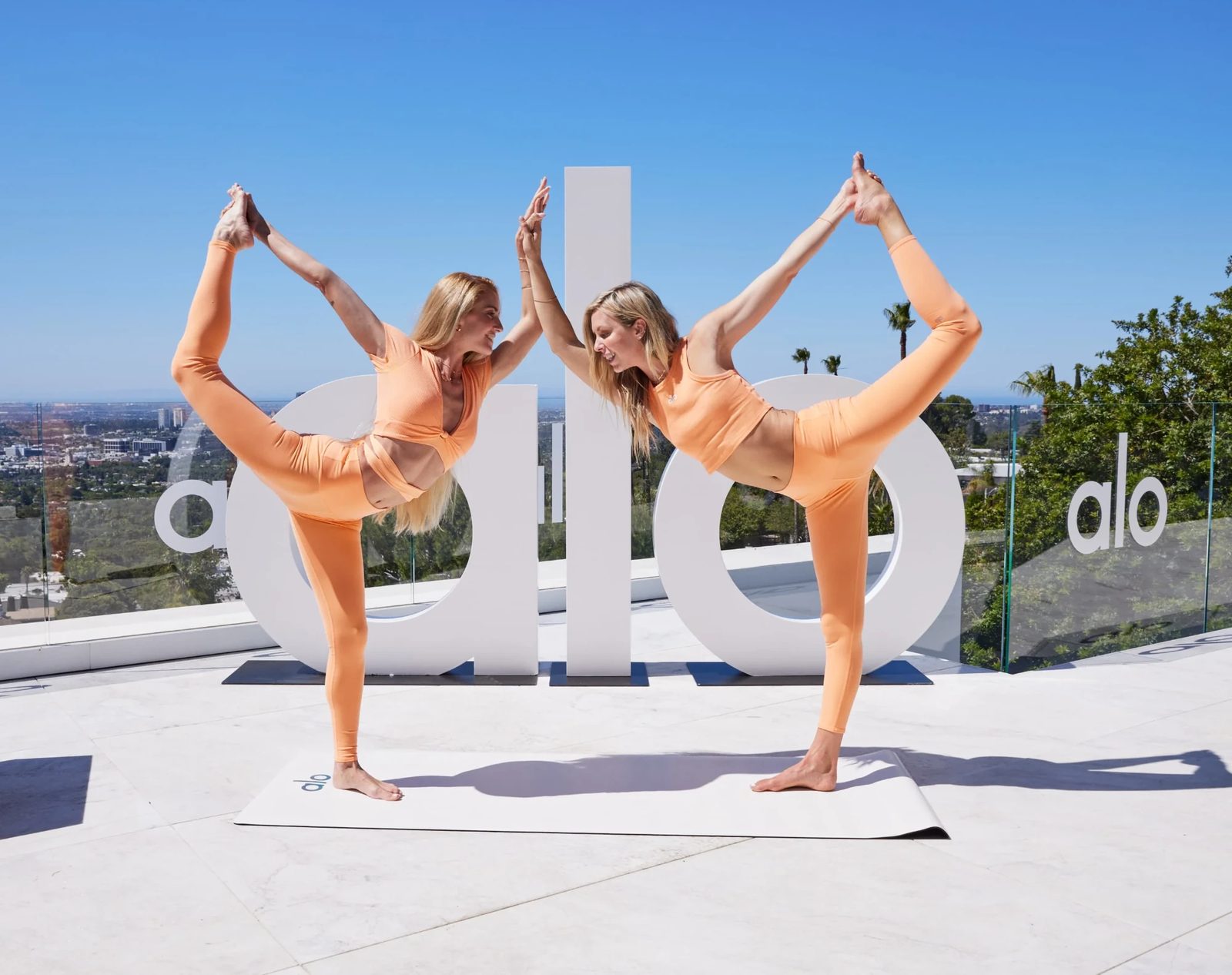
On 8 March 2026, Alo used it. For International Women’s Day the brand programmed around 270 free classes (Pilates, yoga, meditation, sound baths) across nine countries, in Los Angeles, London, Miami, Sydney, Vancouver and Seoul, hosted at partner studios including Forza in Nashville, Sarana in Sydney, Ayla Pilates in Rome and Homebody in Los Angeles. It layered on community wellness walks that started and ended at Alo Sanctuaries, plus a series of fireside conversations with women thought leaders at its Fashion Island, Miami Design District and Regent Street locations.
Worth noting from where we sit: Fashion Island is in Newport Beach. One of the stops on a nine-country global program was fifteen minutes from our desk, which is exactly how a global calendar is supposed to feel.
The brand also sits inside fashion’s calendar rather than competing with it, serving as the wellness partner of New York Fashion Week through its IMG partnership, and it has extended the same idea into gaming, where its Roblox “Alo Sanctuary” let players unlock in-game gear by tapping NFC tags in real stores.
Why it works
- Recurring beats rare. A single tentpole gives you one spike and eleven quiet months. A calendar gives a customer a reason to come back on a Tuesday. Alo’s programming isn’t a campaign. It’s a habit it’s trying to install.
- The experience is the product demo. You cannot credibly sell a movement practice from a photo wall. A free sound bath puts a person in the clothes, doing the thing the clothes are for. The proof and the pitch are the same event.
- Free removes the argument. No ticket, no minimum spend, no purchase required. The cost of trying Alo drops to an hour of someone’s Sunday, and an hour is a much easier ask than $128.
- It borrows other people’s rooms. Most of those 270 classes ran inside independent partner studios, not Alo real estate. The studio brings the teacher, the mats and a warm local audience; Alo brings the reason and the reach. Both sides get something.
- It shows up where culture already is. Wellness programming inside New York Fashion Week is a smart piece of positioning: rather than fight for attention against the shows, Alo becomes the thing that makes the week survivable.
Alo isn’t buying attention for an hour. It’s buying a place in someone’s week.
The part worth being honest about
Almost none of this is available to a brand without capital. A network of 169 venues is a decade of investment, and “programme all of them on the same day” is a logistics problem most teams could not staff. If you read Alo’s calendar as a to-do list, you will just feel poor.
Read it as a structure instead, and it gets useful fast, because the mechanism doing the heavy lifting isn’t the real estate. It’s the partner studios.
What your brand can borrow
You don’t need venues. You need a repeatable hour and a partner who already owns the room. Pick one format you can run every month (a class, a walk, a workshop, a fireside) and run it in someone else’s space: a studio, a bookshop, a roastery, a gym. Keep it free. Keep the date predictable. Let the twelfth one be better than the first.
One well-run recurring hour will outperform a single expensive build, because the build ends and the habit doesn’t. It’s the same logic behind the best small-format pop-ups: see how Summer Fridays does it in two days and one room, and the opposite end of the spectrum from a Rhode-style scarcity moment.
The takeaway: the most valuable thing an activation can earn isn’t a post. It’s a place on the calendar. Design something you can repeat.
Recurring programming is one of the formats we build at Storyboard, the kind that gives people a reason to return, not just to visit. If you’re thinking about one, tell us about it.